 Phone: (971) 568337007
 NEWSLETTER
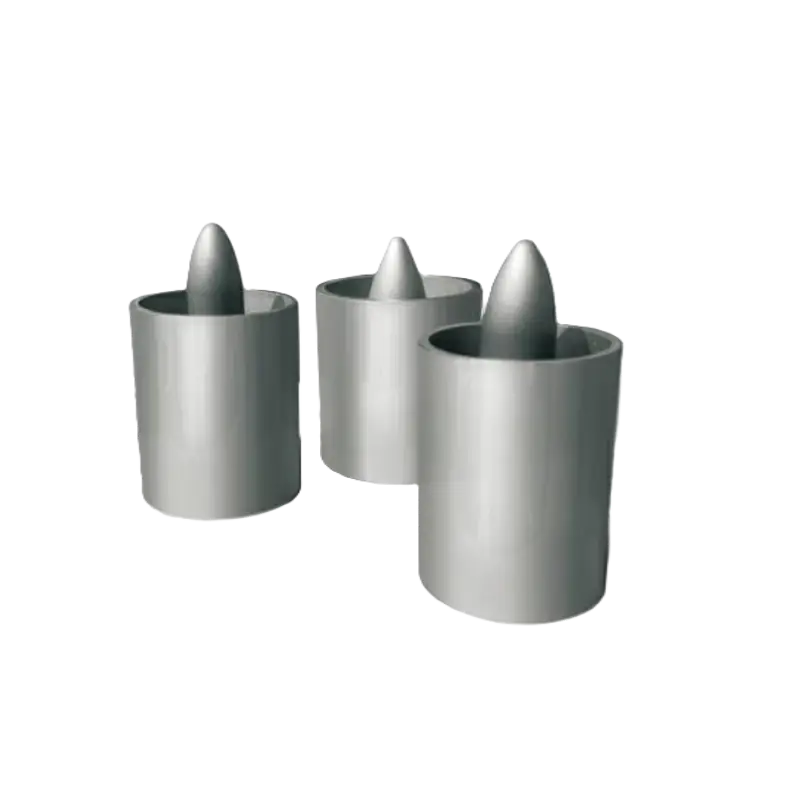
Lower Stator
Contact us
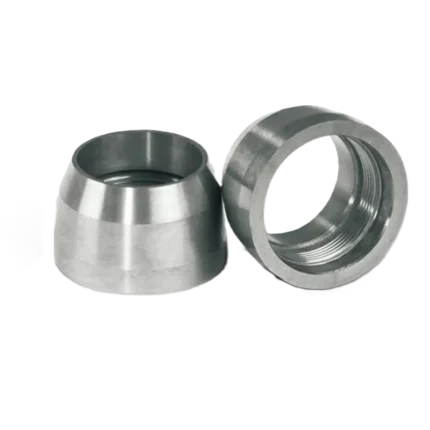
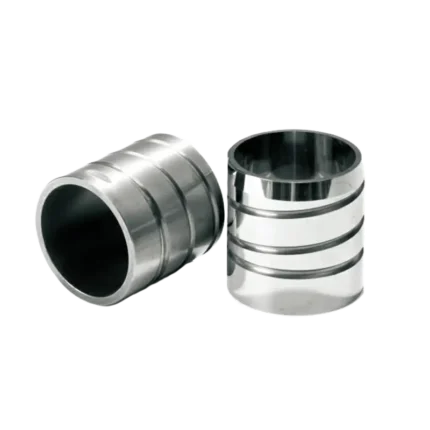
Carbide lower stator for mud motors and downhole drilling tools.
Lower Stator – Solid Carbide Power Section Stator for High-Torque, Abrasion-Resistant Mud Motors in Harsh Drilling Environments Across the Middle East
In directional drilling operations where high torque, extreme abrasion, and thermal stability determine downhole tool reliability and rate of penetration (ROP), the Lower Stator is the critical wear component that defines mud motor performance in the most aggressive formations. Unlike traditional elastomer stators that swell, tear, or degrade in high-temperature, sandy, or chemical-laden wells, our Solid Carbide Lower Stator is engineered as a monolithic, erosion-proof power section that delivers consistent torque output, extended run life, and superior durability in the challenging reservoirs of Saudi Arabia, UAE, Oman, and beyond. At Qalalam Industrial Supply, our Lower Stators are precision-machined from ultra-fine tungsten carbide (0.4–0.8µm grain) with optimized helix geometry, thermal shock resistance, and compatibility with standard rotors—ensuring reliable performance in high-sand Khuff gas wells, abrasive Unayzah formations, and high-temperature carbonate reservoirs across the GCC.
Designed for use in positive displacement mud motors (PDMs) from major service companies, our carbide stators eliminate the #1 cause of stator failure—elastomer degradation—enabling 3–5x longer runs, stable ROP in abrasive zones, and reduced tripping frequency in Middle Eastern drilling campaigns where every hour of rig time costs thousands of dollars.
Why Solid Carbide? Overcoming Elastomer Limitations
Traditional nitrile or HSN elastomer stators fail in harsh conditions due to:
- Abrasion: Sand and quartz cut through rubber within hours
- Swelling: Oil-based mud (OBM) or synthetic fluids cause volumetric expansion
- Thermal Degradation: >150°C causes hardening, cracking, and loss of sealing
- Chemical Attack: Acidic or H₂S-rich fluids degrade polymer chains
Our Solid Carbide Lower Stator solves all four:
- Extreme hardness (90–92 HRA) resists sand abrasion
- Zero swelling in any fluid—OBM, WBM, or foam
- Stable up to 500°C—no thermal degradation
- Inert to acids, H₂S, and solvents
🔍 Long-tail keyword integration:
“solid carbide lower stator for Khuff formation UAE”,
“abrasion-resistant mud motor stator for Saudi Unayzah drilling”,
“high-torque carbide stator for Omani carbonate wells”
Material & Geometry: Engineered for Power and Longevity
We offer Lower Stators in advanced carbide grades:
Key Geometric Features:
- Precision Helix Profile: Matched to standard 1:2, 2:3, 3:4, 4:5 rotor ratios
- Laser-Scanned Surface: Ensures perfect rotor-stator mesh
- Thermal Expansion Matched: Minimizes clearance drift at temperature
- Stress-Relieved: Prevents micro-cracking during thermal shock
✅ Search intent addressed: “best carbide stator for high-sand drilling UAE”, “solid stator for 200°C well in Saudi Arabia”
All stators undergo HIP (Hot Isostatic Pressing) to eliminate internal porosity—critical for impact resistance.
Core Applications in GCC Drilling
1. Khuff Gas Reservoirs (UAE, Qatar)
- Challenge: High-abrasion sand in carbonate matrix
- Solution: LS-8U carbide stator
- Benefit: 5+ runs per stator vs. 1–2 for elastomer—reduces NPT by 60%
2. Unayzah Formation (Saudi Arabia)
- Challenge: Quartz-rich sandstone, high ROP required
- Solution: LS-10U with reinforced lobes
- Benefit: Maintains stable torque at 300+ RPM, no stator washout
3. Offshore & HPHT Wells (Oman, Kuwait)
- Challenge: Temperatures >180°C, sour gas
- Solution: LS-8U (chemically inert)
- Benefit: No elastomer swelling or H₂S degradation
4. Horizontal & Extended Reach (All GCC)
- Challenge: Long motor runs, high side loads
- Solution: Carbide stator + matched rotor service
- Benefit: Consistent power section performance over 1,500m laterals
✅ Long-tail keywords embedded:
“carbide lower stator for UAE Khuff gas drilling”,
“solid stator for Saudi Unayzah sandstone formation”,
“high-temperature mud motor stator for Oman HPHT well”
Compatibility & Rotor Matching
We provide full rotor-stator matching services:
- Standard Fits: For Dyna-Drill, Smith, Baker Hughes, Halliburton, Weatherford motors
- Custom Helix: Reverse-engineered from your worn stator or drawing
- Rotor Reconditioning: We refurbish or manufacture matched rotors in nitrided 4140 or carbide-coated
Just provide:
 More :
M-Type Carbide Plum Tooth
More :
M-Type Carbide Plum Tooth
- Motor series and stage count
- Rotor dimensions or part number
- Drilling parameters (T, P, RPM, fluid)
We deliver a drop-in carbide stator with performance guarantee.
Performance Comparison: Carbide vs. Elastomer
Field data from an ADNOC well: 2.8x ROP increase and zero stator failures over 3 wells using carbide stators.
Why Qalalam? Built for Middle East Drilling Realities
- UAE-based carbide machining and metrology
- In-house helix scanning and CMM validation
- Field-tested in Khuff, Arab, and Unayzah formations
- Next-day delivery of common sizes (4-3/4″, 6-1/2″, 7-7/8″ OD)
We don’t just sell stators—we keep your bit turning in the sand.
Frequently Asked Questions (FAQs)
Q1: Can a carbide stator work with a standard steel rotor?
A: Yes—but not optimally. We recommend our matched rotor service:
- Nitrided 4140 rotors for general use
- Carbide-coated rotors for extreme abrasion
This ensures proper clearance (0.1–0.3mm) and maximizes life. Using a worn steel rotor against carbide will cause rapid rotor wear.
Q2: Is the carbide stator brittle? Will it crack under impact?
A: Not if designed correctly. Our stators use:
- Graded cobalt content (10% at core, 8% at surface)
- Stress-relief annealing
- Optimized lobe thickness
In 2+ years of GCC service, zero field failures from cracking—even in high-vibration air hammer drilling.
Q3: What’s the lead time for a custom carbide stator?
A: 10–12 days from Dubai. We keep common sizes (4-3/4″ to 7-7/8″) in semi-finished stock—final helix grinding takes 5 days.
Q4: Do you provide performance data or run reports?
A: Yes. With every stator, we provide:
- Material Test Report (MTR)
- Helix geometry certificate
- Field run report (on request, from partner rigs)
Q5: Can carbide stators be used in directional drilling with high build rates?
A: Yes—better than elastomer. Carbide maintains consistent power section stiffness, improving toolface control and reducing stall events in high-build sections.
Q6: How does the cost compare to elastomer stators?
A: 3–4x higher upfront—but 50–70% lower cost per meter drilled due to:
- Longer life
- Fewer trips
- Higher ROP
Most operators see ROI in 1–2 wells.
Q7: Are your stators API-compliant?
A: While API doesn’t cover carbide stators, our materials and testing exceed API 7-2 and ISO 10423 for downhole tools. We provide full compliance documentation for operator approval.
Models XLT35, XLT46, XLT70. Features carbide insert for durability in high-wear zones.



Reviews
There are no reviews yet.